- Far East Holistic Health Care Center2130 Huntington Drive, Suite 214
South Pasadena, CA 91030P: (626) 441-6639
F: (626) 441-6399 - Testimonials
“I had been experiencing pain in the joints of both hands. An orthopedic surgeon sent me to a lab for blood tests and prescribed anti-inflammatory drugs. I was then sent to see a Rheumatologist.
I went to see this new doctor who also sent me to a lab for blood and urine tests. He said the tests showed that I was suffering from connective joint disease. He prescribed drugs which were upsetting to my stomach and caused darkening of the... Read more »
“I have suffered from chronic back pain for over twelve years. In time my back condition has steadily gotten worse. It was confirmed through an MRI scan that I was suffering from a degenerative disc disease and that I also had herniated a disc that was pinching my sciatic nerve. The pain of sciatica is almost to incredible to describe and is something that can overwhelm your life. At times the shooting pain down my right leg was so bad,... Read more »
“Thank you for helping me stop “freezing to death.” Your acupuncture sessions straightened out my circulation problem and went a long way to improve all my digestive problems after my surgery. They also improved my energy level greatly.
I’m still amazed that you stopped the progress of my bronchitis in only two days. As you know I have had chronic bronchitis since I was a child suffering through bouts of it that always lasted from two to four weeks, yet... Read more »
Japanese Acupuncture
Chinese & Japanese Acupuncture: Two Traditions, One Lineage
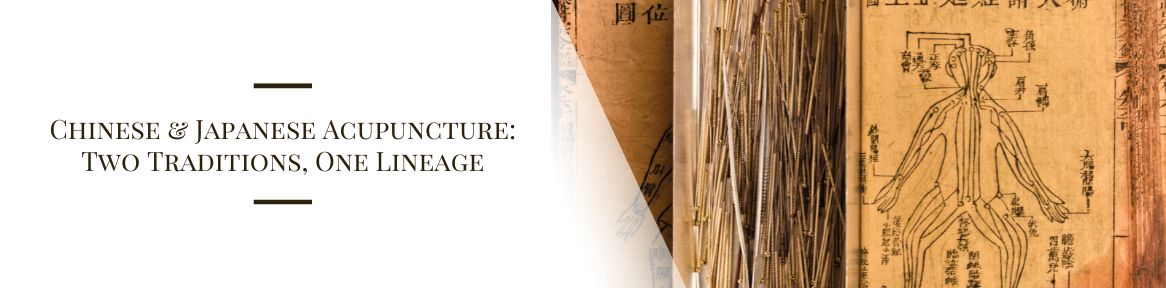
Both Japanese and Chinese acupuncture spring from the same classical East Asian medical roots, yet they diverged over centuries into distinct clinical styles. In Japan, techniques evolved toward gentler, highly tactile methods. And in China, the practice of acupuncture tended to emphasize stronger needle sensation and standardized point prescriptions within Traditional Chinese Medicine, also known as TCM. While some have their preferences, neither is “better” than the other. The right choice often depends on the patient’s condition, sensitivity, and their goals. continue reading

